
A wet floor beside the water heater is a call we hear about constantly, and the first question is always the same: where is it actually coming from? Water runs downhill and pools at the lowest point, so the puddle is often nowhere near the source. It might be the temperature and pressure relief valve or its discharge line, the drain valve near the bottom of the tank, the inlet and outlet fittings on top, condensation on a cold tank, or a nearby pipe that has nothing to do with the heater. It might also be the tank itself, and that answer changes everything. In Charlottesville, VA, we trace the source before we touch a wrench.
Finding the source takes a few careful steps. We clear and dry the area, then watch where new water appears. First we check the relief valve and the pipe it drains through, followed by the drain valve and the inlet and outlet fittings, where dielectric unions and flex connectors commonly fail. If the heater is gas-fired, we look inside the burner compartment, since water there can be condensation or a sign the tank has given out. When the relief valve is involved, we measure water pressure and check for proper thermal expansion control. We recommend nothing until the source is confirmed.
Most leaks are handled the same day we find them. We replace worn relief valves, swap plastic drain valves for durable brass ones, rebuild corroded connections, add or recharge an expansion tank, and install a pressure-reducing valve when street pressure is the real culprit. If the tank itself is leaking, there is no safe patch, and we will tell you that plainly along with your replacement options. We also help protect your home going forward: a drain pan piped to a proper drain, a water sensor or automatic shutoff valve, and a clear label on the shutoff. For water heater leak repair in Charlottesville, call (434) 201-0368.
Our two most requested services are Water Heater Repair in Charlottesville and Water Heater Replacement in Charlottesville. Start there if you're not sure what you need.
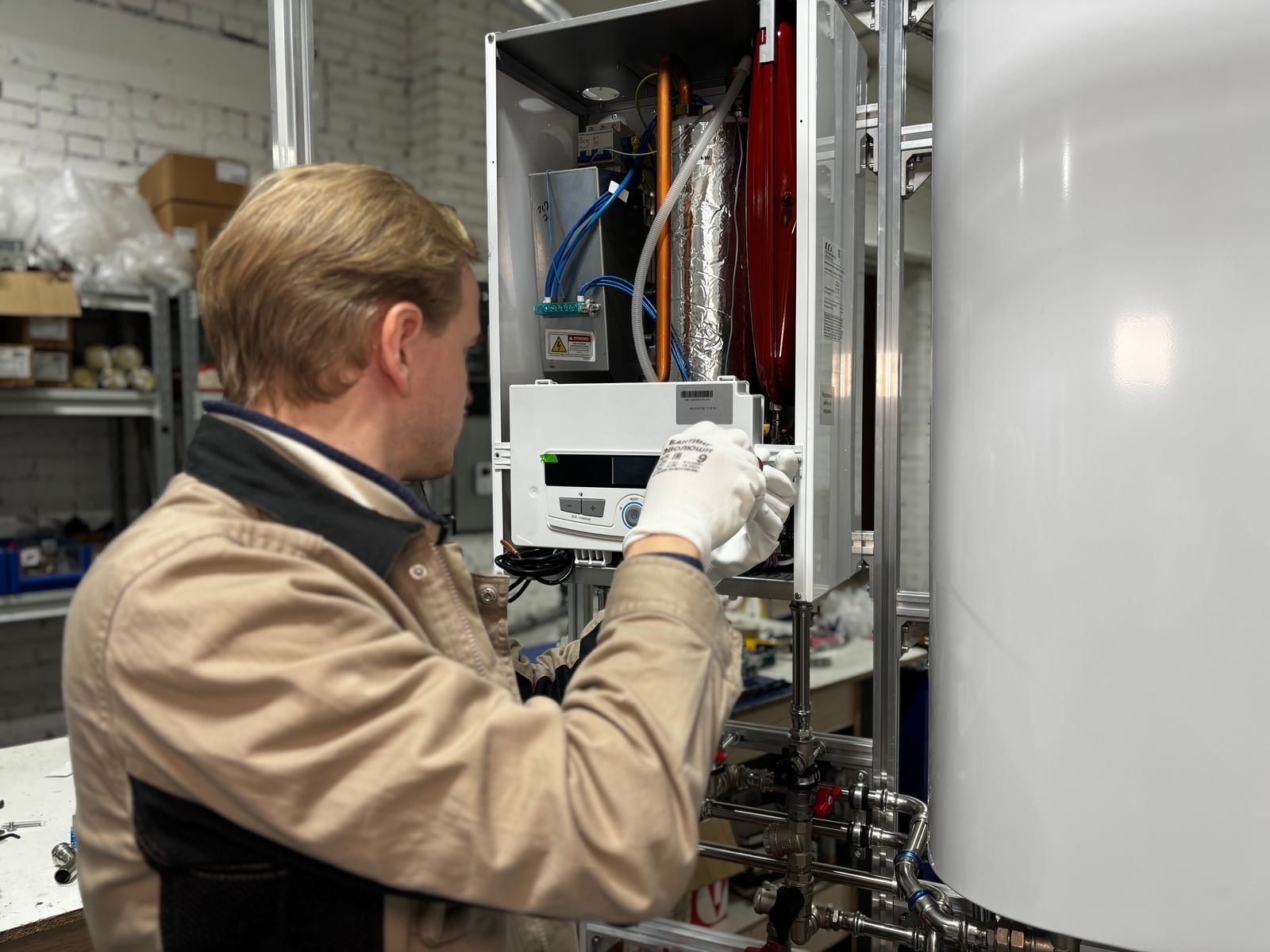
Warning Signs to Watch For
Water heaters usually give plenty of warning before they fail, as long as you know what to look and listen for. Keep an eye out for the following:
- A T&P valve line that drips or releases water now and then
- Water inside the burner compartment of a gas heater
- Rust, green corrosion, or white crust on the fittings at the top of the tank
- Higher water use with no obvious explanation
- Rusty or discolored hot water paired with dampness at the base
- A puddle or damp spot on the floor around the base of the tank
- A drain valve at the bottom of the tank that drips even when closed
- A musty odor or soft floor around the heater location
Early Action Saves Money
A worn-out anode rod, a sediment-choked tank, or a weak thermocouple rarely fixes itself, and the repair usually costs more the longer it waits. A quick call to (434) 201-0368 gets a technician out to check it before it becomes an emergency.
Frequently Asked Questions About Water Heater Leak Repair
Why Hire a Professional for Water Heater Leak Repair?
Water heater leaks are easy to misread. A drip that appears to come from the bottom may start at a fitting on top and run down the jacket, and condensation on a cold tank can look exactly like a failure. Replacing the wrong part wastes money, and overlooking a tank that is starting to go can lead to a much bigger flood later. There are safety concerns, too. The relief valve guards the tank against runaway heat and pressure, and blocking it to stop a drip can set up a violent failure. Corroded fittings on an older tank can crack under a wrench, and electric models run on 240-volt power that do not mix well with wet floors.
We work through leaks step by step and fix the cause along with the drip. We start by drying the unit, watch for fresh water, test water pressure when the relief valve is involved, and check for thermal expansion problems that make valves weep. We replace valves and fittings with durable replacements, swap plastic drain valves for brass, and add an expansion tank or pressure-reducing valve when pressure is the root problem. If the tank has failed, we tell you directly and explain replacement options, including the drain pan and leak protection that can keep the next failure from soaking your floors.
What to Expect From Our Team
Good water heater work comes down to a consistent routine, and ours starts with a real diagnosis instead of a guess. Here's what you can expect when you choose Charlottesville Water Heater:
Contain the Water
First the water gets stopped. We confirm the supply valve is closed, the heater is off, and the area is safe to work in.
Pinpoint the Leak
With the surfaces dried, fresh water shows us where the leak begins, whether that is a valve, a fitting, condensation, or the tank wall.
Test the Pressure
Leaks often have a cause behind the cause. Pressure above about 80 psi or a waterlogged expansion tank gets found and corrected.
Repair, Refill & Verify
We replace the failed part, refill and purge the tank, restart the heater, and confirm every joint stays dry. A leaking tank gets an honest replacement recommendation instead.
How to Prevent Water Heater Problems
Most of the failures we see could have been delayed for years with basic upkeep. Here are our recommendations:
- Draining sediment every year helps the bottom of the tank last longer
- Have household pressure measured, since high pressure wears out relief valves and fittings faster
- Put a water leak sensor on the floor next to the tank so a drip gets noticed early
- Make a habit of checking around the heater for moisture or corrosion every few weeks
- Inspecting the anode rod periodically is one of the best ways to delay a tank leak
- Ask about expansion control if your home has a check valve or backflow preventer
- Place the heater in a drain pan with a line to a floor drain or outdoors, especially above finished space
DIY vs. Professional Water Heater Leak Repair
Some simple checks are fine to do yourself, but most water heater repairs benefit from professional tools, training, and experience. Here's a comparison:
| Factor | Doing It Yourself | Hiring a Pro |
|---|---|---|
| Finding the Source | Replace parts until the drip stops | Leak traced to its true starting point |
| T&P Valve | Valve swapped without checking why | Valve and pressure both addressed |
| Old Fittings | Forced loose and damaged further | Corroded connections replaced with new fittings |
| False Alarms | Normal sweating treated as a leak | Only real problems get repaired |
| Protecting the Home | Damage prevention skipped | Shutoff labeled and leak alarms suggested |
| Outcome | Temporary fix that may fail again | Confirmed dry repair or honest replacement advice |
Let's Get Your Hot Water Back
Every day a leak or a failing part goes unchecked puts more stress on the tank. Get Charlottesville Water Heater on the job today.
Call (434) 201-0368 NowCommunities We Cover
Our service area reaches well past the city limits. Choose your community for local details.